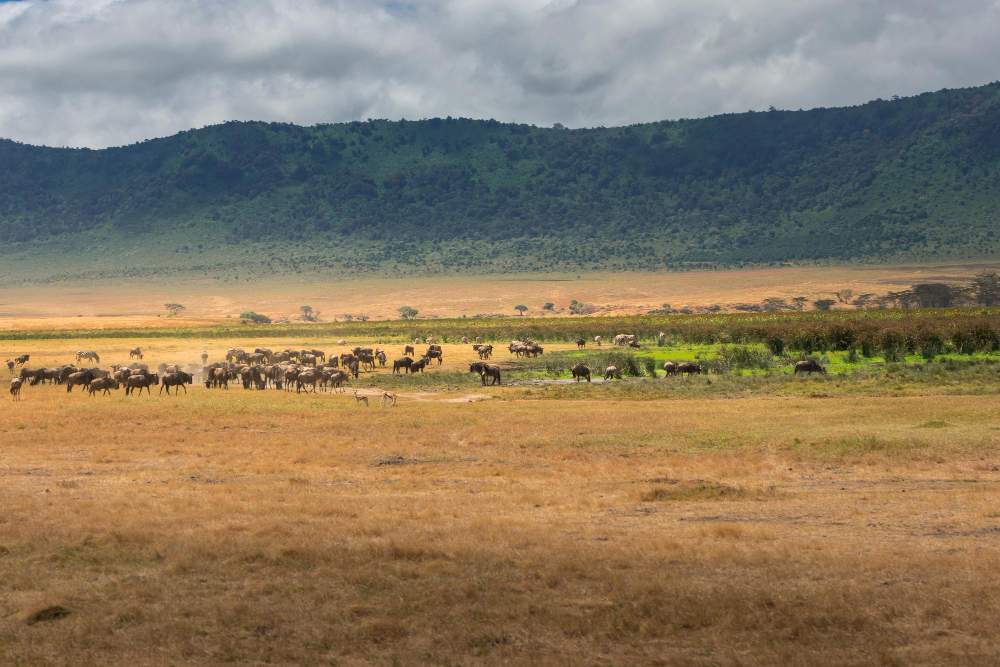
Located in northern Tanzania, the Ngorongoro Conservation Area is one of Africa’s most breathtaking safari destinations. Famous for the Ngorongoro Crater, the world’s largest unbroken volcanic caldera, this UNESCO World Heritage Site combines spectacular landscapes, abundant wildlife, and rich cultural heritage.
Often described as the “Eighth Wonder of the World,” Ngorongoro offers travelers the chance to witness the Big Five, interact with the Maasai people, and explore diverse ecosystems—all within one extraordinary location.
Ngorongoro stands out because it is both a natural sanctuary and a cultural landscape. Unlike national parks, it is a conservation area where wildlife and humans coexist.
Key Highlights
- Home to the Ngorongoro Crater, a natural wonder filled with wildlife.
- A chance to see the Big Five in a single game drive.
- Maasai villages that preserve centuries-old traditions.
- Proximity to other top attractions like Serengeti and Lake Manyara.
The jewel of the conservation area, the crater covers 260 square kilometers and plunges 600 meters deep. It acts as a natural enclosure for thousands of animals, making it one of the densest wildlife viewing areas in the world.
- Wildlife: Lions, elephants, buffalo, zebras, wildebeest, and hippos thrive here.
- Rare Species: Black rhinos and cheetahs are among the most sought-after sightings.
- Birdlife: Over 500 species, including flamingos at Lake Magadi inside the crater.
1. Olduvai Gorge
Often called the “Cradle of Mankind,” this archaeological site has produced fossils dating back nearly two million years, offering insights into human evolution.
2. Empakaai Crater
A smaller crater known for its alkaline lake, flocks of flamingos, and scenic hiking trails.
3. Olmoti Crater
Accessible via guided walks, Olmoti offers lush highlands and the Munge Waterfall.
4. Ndutu Plains
Located between Ngorongoro and Serengeti, these plains are famous for wildebeest calving season during the Great Migration.
- Game Drives: Explore the crater floor and surrounding areas for diverse wildlife.
- Cultural Visits: Experience Maasai traditions and learn about their way of life.
- Hiking & Walking Safaris: Trek in the highlands of Empakaai and Olmoti.
- Photography: Capture sweeping landscapes, wildlife, and cultural encounters.
The conservation area is a year-round destination, but experiences vary:
- Dry Season (June–October): Ideal for game viewing with thinner vegetation.
- Wet Season (November–May): Lush green landscapes, fewer crowds, and excellent birdwatching.
- January–February: Best for seeing wildebeest calving in the nearby Ndutu Plains.
- By Air: Daily flights from Arusha, Serengeti, and Kilimanjaro to nearby airstrips.
- By Road: A scenic 3–4 hour drive from Arusha, often included in the northern safari circuit.
Ngorongoro offers a wide range of accommodation to suit every budget:
- Luxury Lodges: Crater rim lodges with panoramic views and high-end amenities.
- Mid-Range Camps: Tented camps offering comfort close to the crater.
- Budget Options: Basic campsites for adventurous travelers.
- Arrive early for crater game drives, as vehicle numbers are limited each day.
- Bring warm clothing for chilly mornings at higher altitudes.
- Book accommodations in advance, especially crater rim lodges.
- Combine Ngorongoro with Serengeti and Tarangire for a complete safari circuit.
1. Can you see the Big Five in Ngorongoro?
Yes. Elephants, lions, leopards, buffalo, and rhinos can all be spotted, though leopards are rare.
2. How many days should you spend in Ngorongoro?
At least 2–3 days are recommended to explore the crater and surrounding attractions.
3. Is Ngorongoro family-friendly?
Yes. Game drives and cultural visits are suitable for families, though young children may tire on long safaris.
4. What makes Ngorongoro different from Serengeti?
Ngorongoro is more compact with denser wildlife viewing, while Serengeti is vast and famous for the Great Migration.